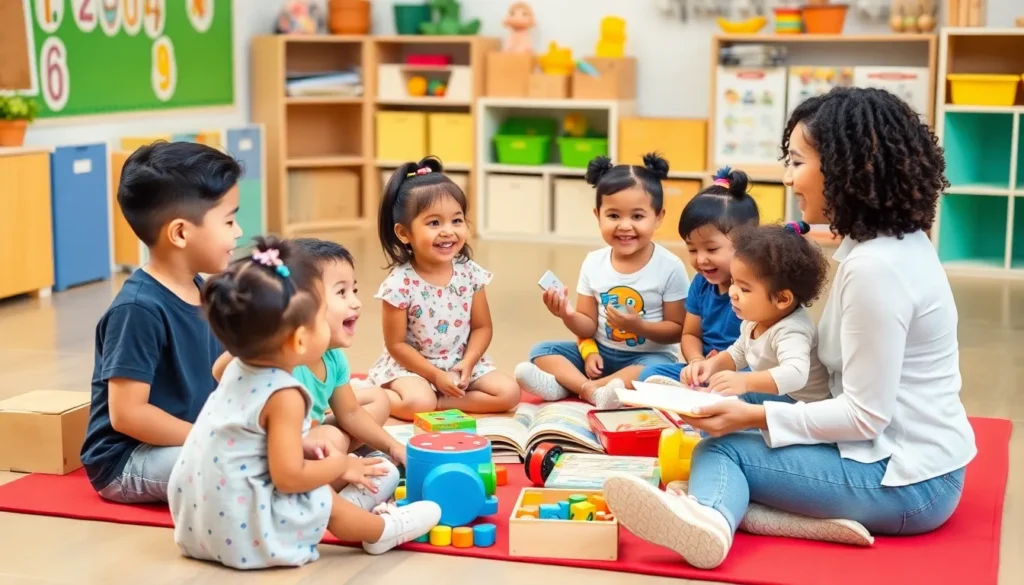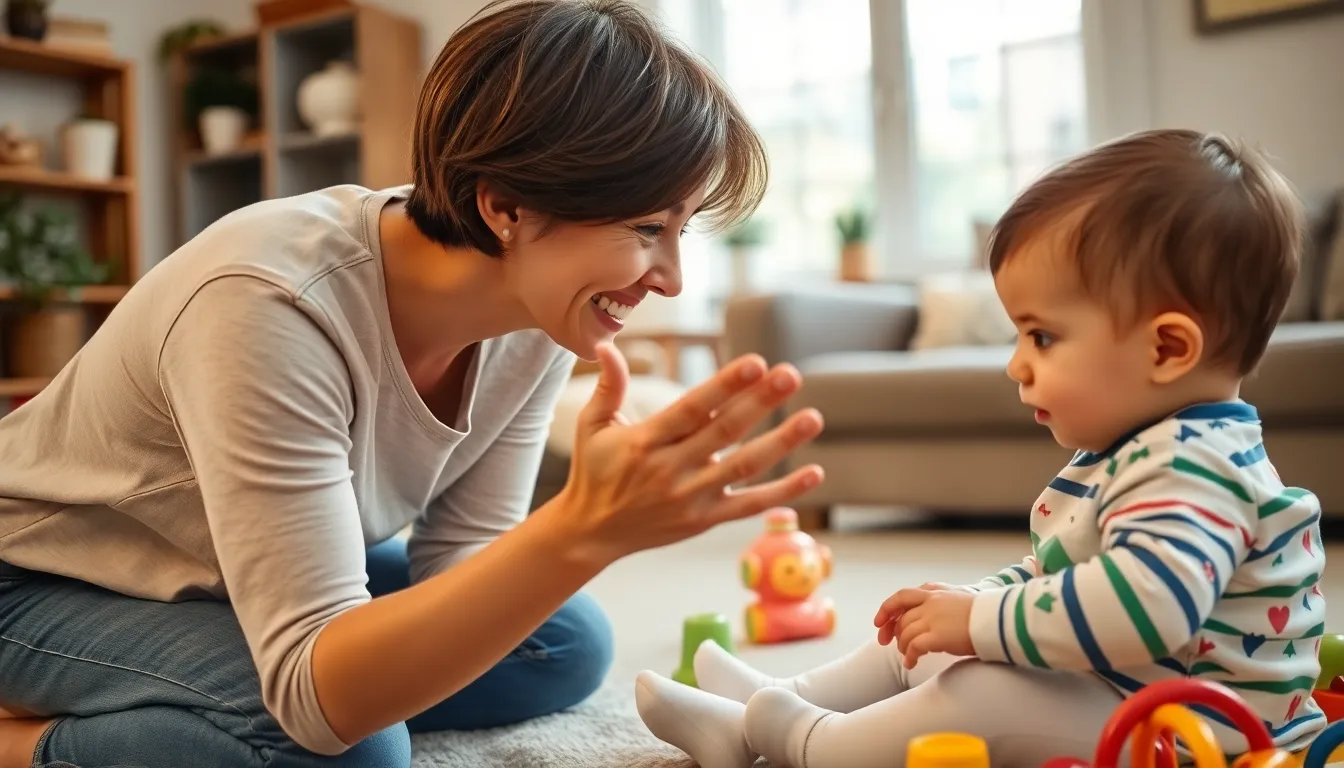
Imagine a world where your little one can tell you they’re hungry without a meltdown or express their need for a diaper change without a symphony of tears. Welcome to the delightful realm of baby sign language! This magical tool empowers babies to communicate their needs long before they can form words.
What Is Baby Sign Language?
Baby sign language refers to a method of communication using hand signs and gestures. This approach allows infants to express their needs before they can speak. Many parents find that their babies can use simple signs, such as “more,” “milk,” or “finished,” to convey messages effectively.
Utilizing baby sign language fosters early communication skills. Signs provide a way for infants to indicate wants without crying. Research suggests that babies who use sign language may experience reduced frustration and anxiety. Studies indicate that these infants often develop larger vocabularies as they transition to spoken language.
Parents often report increased bonding with their babies through sign language. Engaging in this form of communication helps create a deeper understanding of a baby’s feelings and desires. With consistent practice, caregivers can teach signs during routine activities, making it a natural part of daily life.
Teaching baby sign language involves demonstrating signs in clear contexts. For example, using the sign for “milk” while holding a bottle reinforces the connection between the sign and the action. Consistency plays a crucial role; repeating signs in relevant situations enhances recognition and understanding.
Support for this learning approach comes from various studies. Research from developmental psychology highlights that early communication methods can strengthen cognitive skills. Additionally, evidence shows that sign language may boost social-emotional development in infants, making them more adept at expressing their feelings.
Overall, baby sign language serves as a bridge between infancy and spoken language. Encouragement and practice in a nurturing environment enhance a child’s ability to communicate effectively. This early introduction to language promotes confidence and self-expression in young children, shaping their social interactions.
Benefits of Baby Sign Language
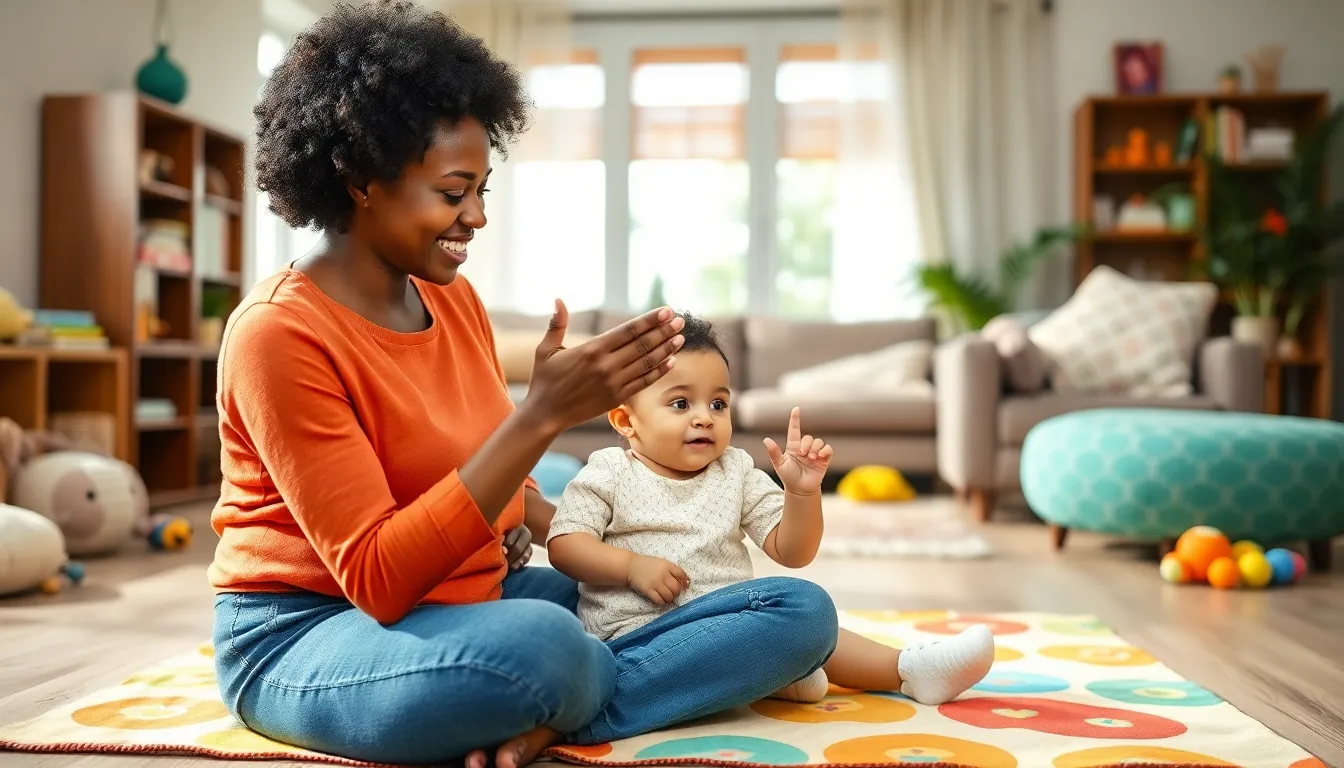
Baby sign language offers numerous advantages for both infants and parents. It facilitates better communication, minimizes frustration, and strengthens emotional connections.
Enhancing Communication
Baby sign language improves early communication skills significantly. Infants learn to express their needs using simple signs such as “eat,” “drink,” or “play.” Parents easily understand these signs, which fosters effective interactions. Additionally, studies show that sign language can enhance vocabulary development as children transition to spoken words, leading to richer language skills. Engaging in this method allows parents and babies to build a shared language, deepening their bond.
Reducing Frustration
Frustration decreases when babies can communicate through signs. Rather than crying for attention, infants convey their feelings and wants clearly. This approach alleviates misunderstandings and promotes a sense of security for both parties. Research indicates that babies proficient in sign language experience lower stress levels. Parents often notice a reduction in tantrums, resulting in a more harmonious environment. This effective communication method cultivates emotional expression and understanding, creating a positive atmosphere for development.
How to Get Started with Baby Sign Language
Starting with baby sign language involves a few simple steps. Parents can choose signs that are easy to remember and relevant to their baby’s needs.
Choosing the Right Signs
Selecting signs that resonate with everyday situations is crucial. Common signs such as “more,” “milk,” and “finished” serve as practical examples. Prioritizing signs related to hunger, play, and comfort helps align with a baby’s routine. Resources like books or classes can provide a list of recommended signs. Additionally, observing a baby’s interests can guide sign selection, making communication more engaging.
Incorporating Signs into Daily Life
Incorporation of signs into daily interactions enhances understanding. Parents can pair signs with spoken words, reinforcing meaning through repetition. Consistency is vital; using the same sign in similar contexts helps babies learn. During mealtime, for instance, parents can prompt “more” when food is offered. Making signing a regular part of everyday routines strengthens recognition and recall, fostering a positive communication environment. Engaging with playful scenarios, such as signing during playtime, further enriches the learning experience.
Common Myths About Baby Sign Language
Various misconceptions surround baby sign language, leading to confusion among parents. Understanding these myths clarifies the true benefits of using sign language with infants.
Myth 1: Delays Speech Development
Many believe that using sign language stunts speech development in babies. Research contradicts this notion, showing that babies who sign often develop larger vocabularies later on. Signs help bridge communication gaps before infants can articulate words. Encouraging the use of signs facilitates early language skills. Additionally, enhanced ability to communicate lowers frustration levels, reducing crying episodes. Exposure to both sign and spoken language nurtures overall linguistic abilities, leading to more advanced verbal communication.
Myth 2: Only for Certain Babies
Some think baby sign language is suitable for only specific children. This assumption lacks support; all infants can benefit from signing, regardless of their unique developmental timelines. Signing enhances interaction for babies with varied communication styles. Engaging with signs fosters connections in both typical and special needs situations. The simplicity of signs makes them accessible to every child. By promoting inclusivity, communication emerges as a universal tool for families, further strengthening bonds.
Resources for Learning Baby Sign Language
Parents can explore various resources to effectively learn baby sign language. Books specifically designed for parents and caregivers serve as a valuable starting point. Popular titles like “Baby Sign Language Basics” by Monta Z. Briant offer clear explanations and illustrations of essential signs.
Online courses provide structured learning opportunities. Websites such as BabySignLanguage.com feature video tutorials that demonstrate signs in context. Interactive learning environments contribute to better retention and understanding of signs.
Local classes often present engaging ways to learn. Community centers and libraries may host workshops led by certified instructors. Such classes allow for hands-on practice and foster connections with other parents.
Mobile applications facilitate on-the-go learning. Apps like Signily and Baby Sign Language Dictionary provide easy access to signs, aiding everyday practice. Users can quickly find signs for specific needs, enhancing communication.
Social media groups connect parents on similar journeys. Platforms like Facebook and Instagram have communities where parents can share experiences, tips, and resources. Joining these groups encourages support and shared learning experiences.
YouTube channels dedicated to baby sign language offer visual demonstrations. Channels like Sign with Me showcase interactive tutorials that parents can follow along with at home. This visual aspect is particularly helpful in understanding the nuances of each sign.
Incorporating these resources into daily routines confirms effectiveness. Consistent practice with a variety of tools helps parents and babies build a shared language. Establishing a routine using these materials strengthens recognition and communication skills.
Baby sign language opens a world of communication for infants and parents alike. By using simple signs, babies can express their needs and emotions, fostering a deeper connection with their caregivers. This method not only reduces frustration but also promotes confidence and self-expression in young children.
As parents embrace baby sign language, they create an enriching environment that supports their child’s development. Engaging with resources and maintaining consistency in practice can enhance the learning experience. Ultimately, baby sign language serves as a powerful tool, bridging the gap between infancy and spoken language while nurturing lasting bonds within families.